It’s been a wild few months, and I’m happy to say I’ve made it through the first act of my book.
There’s still a long way to go but I want to thank my wonderful friends and fam, and the Reedsy team. Without them I’d probably still be rewriting Chapter 1 for the hundredth time. Instead, we’re already well past the 20k threshold.
The timeline may have taken a few hits—BUT—we persevere.
Last week I met with my first ever individual writing coach! And (fingers crossed) my future editor. While she continues to help me move forward I’m here to share another little peek at my progress.
Thank you again, to each and every person here, for your continued support
What’s your New Year’s Resolution? I sure know mine…
Romance novels have soared to popularity over the last few years, and it seems readers everywhere (me included) can’t get enough of these dreamy couples and their love stories.
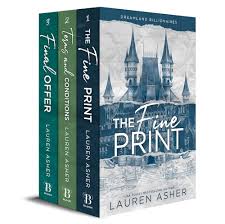
Here are three of my favorite bestselling collections, written by three amazing authors:
The Dreamland Billionaires trilogy by Lauren Asher follows three wealthy brothers, each forced to meet the conditions of their grandfather’s will in order to inherit his empire. Along the way, they find themselves tangled in unlikely, unforgettable romances that test their ambitions and open their hearts. It digs deep into emotional stakes, with each installment hitting harder than the last. Beyond the addictive romances, what keeps readers hooked are the characters—people who stumble into love while navigating ambition, family, and heartbreak are simply…unforgettable.
The Fine Print, Rowan and Zahra’s unorthodox business partnership sparks into something more. He closed his heart off from the world while she looks for love wherever she goes. Together, they’re forced to face vulnerabilities neither of them expected.
Terms and Conditions, Declan and his assistant Iris strike a deal: a fake marriage to secure his control of the company. But the closer they get to the altar, the harder it becomes to tell what’s business and what’s real. Feelings creep in between spreadsheets—leaving both to wonder it was love all along.
Final Offer, Callahan and Alana are thrown back together years after their teenage romance. Fixing up a childhood summer home forces them to face both their past and their present. Old wounds and lingering sparks collide—they have to decide if their second chance is worth the risk.
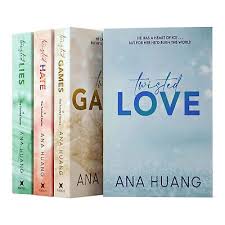
The Twisted Romance books by Ana Huang are some of the most popular romances in recent years, and for good reason. Steamy, emotional, and full of messy-but-beloved tropes: forbidden love, fake dating, friends to lovers. The four interconnected books each center on a different couple, but together they weave a glamorous world of love, loyalty, and drama.
Twisted Love introduces Alex and Ava—a cold billionaire and the little sister of his best friend. He’s ruthless, she’s full of light, and their opposites-attract chemistry heals old wounds and makes literal sparks fly.
Twisted Games follows Bridget, a modern princess, and her grumpy but loyal bodyguard—Rhys. After graduation, involuntary royal duties and forbidden desire clash. She races to experience her life before it’s gone and he’s there every step of the way.
Twisted Hate throws Jules and Josh together in a scorching enemies-with-benefits romance. Jules is Ava’s fiery best friend, and Josh is Ava’s brother—meaning sparks, insults, and grudges are inevitable. But their tension quickly shifts into the messy reality of falling for someone you swore you’d hate forever.
Twisted Lies closes the quartet with Stella and Christian. She’s an influencer trying to keep her life picture-perfect, he’s a man with shadows in his past. Their romance is both glamorous and dangerous, giving the series a breathtaking finale.
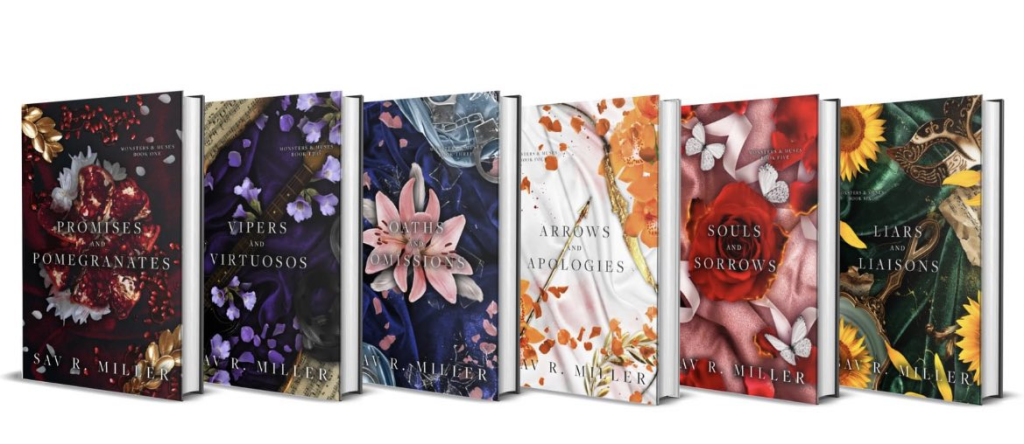
Sav R. Miller’sMonsters & Muses series blends dark romance with mythological inspiration. Each book is a standalone, tied together by themes of obsession, desire, and power. These stories are gritty, indulgent, and unapologetically explicit—perfect for readers who crave morally gray heroes and heroines who refuse to be tamed.
Promises and Pomegranates, a Hades and Persephone inspired love story between Elena Ricci—eldest daughter and mafia princess—and Kal Anderson—notorious fixer and physician nicknamed ‘doctor death’.
Vipers and Virtuosos, brings a new take on Orpheus and Eurydice with a steamy missed connection between rockstar Aiden James and teenage runaway Riley Kelly. She’s willing to do whatever it takes to erase herself—he’s willing to do much worse to find her again.
Oaths and Omissions, inspired by Helen of Troy and the Trojan War, introduces us to Lenny Primrose—daughter of Apollonia’s largest real estate tycoon. Jonas Wolfe, Kal’s right hand man, wants to use her to destroy her father—but he never anticipated falling for the enemy.
Arrows and Apologies, draws inspiration from the story of Apollo and Daphne. Alistair Wolfe is a dangerous man…and the mayor of Apollonia. Cora Aster has come looking for something only he can help her find. She wants answers and he wants her.
Souls and Sorrows, unites siblings we’ve met before, Cash Primrose and Ariana Ricci. An Eros and Psyche inspire history sets these two on a collision course with no brakes.
Liars and Liaisons, finally brings Violet Artinos to center stage in the home of her ex’s brother, Grayson James. This Pan and Echo inspired love story is seductive, haunting finale to Miller’s myth-inspired world
If you love romance and binge reading in cold weather, give these books a try!
If you’ve already read them, let me know what you think!
Welcome to the creative rabbit hole known as worldbuilding: the prep work that gives you an endless stream of ideas, inspiration, and sometimes a mild headache.
If you don’t know where to start—don’t worry, neither do I. But let’s figure it out together.
The backbone of everything you hope to accomplish starts here, and that can be intimidating. You might even know your plot before your setting, which is perfectly fine, but the story still needs somewhere to unfold. Somewhere to build immersion, provide logic and consistency, and even influence the story you’ve imagined. So whatexactlydo you need to build a world?
Let’s break it down into categories that frame our world. With some unavoidable repetition.
Who: The Inhabitants
Every story needs characters, and every character must come from something.
Are they human, alien, magical, artificial?
What cultures exist?
What do they value?
How do they relate to their environment?
Some of these questions will come up again later—a person is often a product of their world. Building them begins with building where they come from.
What: Magic & Technology
A story’s core usually falls into one of these two categories—sometimes both if you’re crafty.
How does the magic system work (if any)?
Is it soft magic (mystical) or hard magic (defined by rules)?
What level of technology is available?
How do magic and tech interact—or conflict?
Establish something that reflects or compliments your premise. Spaceships would feel very out of place at a wizard’s college…maybe.
When: Timeline & History
If you’re writing in the real world, time periods make major differences—and that applies just as much to fictional worlds.
Is this a medieval fantasy? A post-apocalyptic wasteland? A solar punk future?
What major historical events shaped the world?
How long has magic/technology existed?
Are you using a real-world calendar or inventing your own?
Once your world’s core is created, the passage of time can manipulate it in powerful ways. Maybe you imagined a vibrant magical society—but you’re telling a story about the wasteland that remains.
Where: Geography & Setting
The most straightforward question really—what does your world look like?
Imagery is what readers hold onto from the first to the last page. Nothing else matters until the vision we’re meant to see materializes.
Worldbuilding: Politics, Religion, Society
Now that the theoretical shell has been built—how do the inhabitants interact with their world?
Who holds power, and how is it maintained?
What ideologies dominate society?
Are there political tensions, alliances, or civil unrest?
What role does religion play? What is religion?
These are the veins running between everything else in your system—the life breathed into the bones you’ve crafted. They’re the odds stacked for and against your protagonist as they take on their adventure.
How does geography shape conflict?
How important is education, art, fashion, or food?
How do cultural beliefs challenge your protagonist?
Could magic’s limitations create moral dilemmas?
Take your time making these choices. Change them a hundred times. Let your world evolve and surprise you. The deeper you dig, the more real it becomes—not just for your readers, but for you.
And when in doubt, remember: You don’t have to build everything at once. Start with what matters to your story and expand from there.
Here’s a quick checklist of questions I’ve collected across hours of YouTube digging!
I have received most gracious words from some old companions in the capital!
His Majesty has allowed The Annual Larkspur Baking Festival to continue after this harvest.
Perhaps you remember from your studies, Larkspur is home to a host of notorious witches. There is much to be learned and much more to be tasted. These women have cultivated one of the strongest coven-cities on the continent—and they rely heavily on tourism to thrive.
The festival draws artisans from every province. Pies that predict weather, breads that remember the hands that kneaded them, cakes that sing in three-part harmony! I believe it would be an unforgivable sin to pass by without attending the festival.
More importantly, the Grand Coven will be in attendance. Observing them in their element would be an education impossible to replicate in any library.
Do bring an apron and an open mind. The ovens are said to test more than pastry skill; they test character. Larkspur may rise to meet you in ways you don’t yet expect. Naturally, I expect a full report.
Your devoted mentor,
Orlin the Wise Sorcerer Supreme, Fifth Crown Appointee In Service to the Archive and the Realm
ARCHIVE ENTRY #022
Title: “Three Witches Walk Into a Bakery”
Filed by: Estella Wormwood, Apprentice of Orlin the Wise
Date: 9th Embermonth, Year 623
Location: Larkspur
Security Level: Watchlisted (Coven Eyes Only)
—
What began as a local bake-off rapidly escalated into a magical power struggle laced with frosting and soul stealing sourdough.
If this entry smells faintly of burnt sugar and betrayal, that’s because it is.
Signed,
E. Wormwood
(Note: Remiss to share: no autographs or quotes were collected from legends in attendance. We are determined to try again under less dire-dessert circumstances)
—
The Larkspur Annual Baking Fair was—according to the wagon’s travel log—‘mildly competitive, deeply floury, and only fatal in two recorded instances.’…Estella arrived late.
By now the stone square was dusted in powdered sugar and trepidation. Frosted banners fluttered in the breeze—tables bowed under golden pies—and in the center of it all stood three familiar women, each more dramatically dressed than the last.
She patted Orlin’s letter, weighing her breast pocket—just once more, and started for them.
The matron on the left wore a sharp, red-lipped smile and an apron embroidered with thorns and curses—Morrigane Hawkesweed. Her taloned fingers held the brim of a large black hat, its curling tip nearly matching the height of the maiden beside her.
Lilliana Thistlewhip’s lithe form floated in a dress that glistened like summer jam, a bonnet of swirling cream atop her head. Auburn hair spilled down her shoulders like syrup poured from a bottle.
And the crone—Magis Briarwitch—a friend of Orlin The Wise, and head of the Grand Coven. She wrapped her curved spine in something that reeked of remains and radiated enough disdain to curdle cream.
Only now did the parchment over her chest reveal its true meaning. This strange sweet tooth request was in fact a chance to stand before the Grand Witches…with no time to prepare. In true Orlin fashion.
Estella straightened her coat and spine then took one step onto the cobblestones. She immediately sneezed.
The sneeze sparked a nearby cake that exploded into marzipan butterflies. The crowd cheered.
“Oh, lovely,” she muttered, brushing powdered magic from her sleeves. “It’s that kind of baking fair.”
The three witches across the square turned as one. Estella moved swiftly, hoping the air would cool her burning cheeks. Morrigane’s hat tipped just enough to hide her grin. Lilliana swirled her cream bonnet with a flick, as though savoring the spectacle. And Magis’ sigh rolled out like a cold draft from a tomb.
“Ah, golden eyes. I wondered when Orlin would send the fawn,” said Lilliana.
“Tell the old croak, the Oven keeps better time than the court. And his pupil was late.” Magis added, this time to Estella—who now opened her mouth to apologize,
“Truly sorry, the wagon wouldn’t enter the city with this crowd. Master sends his regards. The Crown keeps him quite busy these days.”
Morrigane sneered at that.
“The Crown thinks it can regulate magic,” the shadows cast by her brim began to grow on the cobblestone. “The Oven laughs at kings you know. Let’s see if you can make it laugh.”
“Pardon?” asked Estella.
All three witches gestured toward a half crumbling, brick and mortar bakery to their left. Estella craned her neck to watch the large plumes of purple smoke spill from the chimney.
“Contestant!” someone barked from the crowd.
Before she could look down, a whisk smacked into her palm with the force of destiny—or at least of poorly supervised kitchenware. Then there was a smaller frantic looking witch beside them.
“Wait—no—this is a misunderstanding.” Estella sputtered, trying to shove it back at the official. The whisk clung, handle curling around her wrist like eager ivy.
A cheer rose from the crowd. Someone hurled a puff pastry bouquet in her direction. It burst into pigeons midair. Morrigane snickered again while Lilliana hid her smile behind a gloved hand.
“This isn’t—!” she began again, but her words drowned beneath the ring of a bell and the scrape of chalk across slate. Her name was being scrawled into the contestant roster in glowing sugar script. She turned a confused and pleading expression to Magis—who only stared through her.
“Contestant!” the squat witch barked again, yanking Estella by the elbow.
“No, really, I’m—”
But her protest collapsed as she was shoved through a flour-dusted curtain, leaving the fair—and her chance with the Grand Coven—behind.
—
The air changed at once—cooler, heavier, infused with almond smoke and a hint of doom. The crowd’s roar vanished in an instant, as if she had stepped through a pie crust and into another world.
“Name?” asked another witch with a clipboard and a quill that smoked ominously.
“Estella. But I’m not—” She tried to make out her surroundings through adjusting eyes.
“Great. You’ll be Station Ten. Watch out for Station Nine; she bakes with feelings.”
“Wait, I—” A bell rang and the ground rumbled.
The Oven behind her groaned like a dragon with indigestion. Its massive looming form occupied more than half the space. This was some kind of kitchen. And she was now, unwillingly, part of a ritualistic bake off.
“Begin!”
Estella sighed and looked down at the whisk. It blinked back at her.
“Oh good,” she said, remembering last week’s spat with The Kitchen. “Sentient utensils. What could possibly go wrong?”
She paused only to take a breath. The sweet aromas from each station combined and assaulted her nose. Something sugary, nutty, and a little…electric—magic. Estella gathered that this would not be any sort of normal competition.
Station Nine was indeed baking with feelings.
“I call this ‘Lover’s Regret,’” the witch crooned, pouring viscous heartbreak custard into a crust lined with crushed lavender. Her apron read Break Me, Bake Me, Bind Me in stitched thorn script.
Estella’s station wheezed like an asthmatic accordion as the smaller ovens flared to life. She peered around the room once more. Ten small prep stations were situated in a circle around the large hearth. Across the floor, Station Three coaxed a lump of dough that insisted on standing upright and flexing its gluten.
“Bread golem,” the witch announced proudly. The golem saluted, then attempted to escape across the counter.
On her other side, Station One’s meringue was reciting tragic poetry in a falsetto.
Someone shrieked as a cauldron of caramel began orbiting the chandelier like a molten moon. A choir of cupcakes somewhere were harmonizing. Every clang of pan or spoon carried a faint echo of laughter—as if the kitchen itself enjoyed the chaos. Estella tightened her grip on the sentient whisk.
“Comforting,” she muttered, starting to measure out anti-anxiety jam while dodging a runaway bread roll.
By the time she’d cobbled together something vaguely resembling a tart with a filling of the jam and one very rude cinnamon stick, Estella had gathered several facts:
This was not a baking fair, but a selection rite. Naturally. The winner would be named High Witch of the Threefold Crust. And the losers—would be banished from Larkspur, the only place a witch could practice magic.
“Three witches walk into a bakery,” Varric muttered from the edge of shadows behind the butter churn. “Sounds like a joke. Ends like a tragedy.”
Estella jumped, eyes darting around the room before they landed narrowly on him.
“How did you—I didn’t volunteer for this you know,” she hissed, failing to wipe the flour from her face. “Someone conscripted me!” Hairs danced between her antlers at the outburst.
He browsed the other contestants and sniffed the air. “Uh oh, that one’s cursing the nutmeg. You’re in trouble.”
“Oh please. I study under Orlin the Wise. I can taste a hex blindfolded with a stuffy nose.”
A second later, her tart exploded—and the rest of her hair fell from atop her head.
“Okay,” she brushed the charred crust from her sleeve, “maybe half a hex.”
Varric retreated to the shadows with a smile. Leaving Estella to her defeat.
—
Soon Estella watched as the other witches began offering their creations to The Oven. A small crowd had formed around the hearth to watch the judgment. She could make out the three familiar silhouettes along the back wall.
Magis Briarwitch and her companions had come. Just in time to see Estella, and the finale.
Station Nine crafted an emotional soufflé that sighed with existential dread. Five had baked a casserole that sang hymns to the harvest moon and wept gravy. Three was still busy glazing her cupcakes while they blinked back at her.
The Oven loomed like a cathedral, brick throat glowing with hunger. She could only bear witness as dish after dish was turned away, or completely burned in rejection. Every step toward it became a prayer and a gamble.
Estella, thoroughly annoyed and utterly exhausted, had resorted to sourdough. But not just any sourdough. She needed something to win. “The Bread of Binding,” she’d read aloud from the ancient cookbook Varric had stolen from the Archive’s Restricted Pantry. A stunt she would most likely pay for later.
Infused with memory. Tempered with intent. Risen with soul.
It pulsed. She’d named it Gerald—and staked her livelihood on his complex charm.
“You are the last group,” the announcer called over the crowd, teeth gleaming like fondant knives. “Present your offerings to the Oven.”
It was not a metaphorical oven. It had a mouth…and opinions. Estella’s sourdough loaf—Gerald—trembled in her arms.
“I feel like this is wrong,” he murmured.
“You’re a sentient carb,” she said. “Your entire existence is morally ambiguous.”
Station Nine approached first, souffle oozing in its ramekin. It beat faintly, like a heart too tired to go on. The Oven…sniffed—drawing air in through unseen vents. A shiver ran through the crowd. Flames licked higher, then sank, as though the taste did not satisfy. Her eyes filled with the same dread her dish carried.
The witch’s face paled. She hurried to collect her plate from the slab before being escorted out with the others.
Station Five trembled as she bowed. Her casserole wept audibly, gravy dripping onto her shoes as though begging not to be sacrificed. The Oven gurgled deep in its belly. For one brief, hopeful moment the embers flickered green, like harvest fields—then its gentle melody was strangled. Flames burned it black, ash curling where gravy tears streamed.
Rejection was absolute.
The last witch, Station Three, raised her cakes like a relic. She placed them gently on the hot stone. The Oven sat—unchanging. Until, one by one, the cakes sparked like candles. Only to be snuffed out in a storm of black smoke. Her tray clattered to the floor as the Oven rumbled its disapproval.
Then came Estella. Gerald quivered in her hands, crust warm beneath her palms. She willed down the nausea threatening to surge.
“I don’t like this,” he whispered, his voice a low yeasty hum.
“You don’t have to like it,” she whispered back. “Just…don’t embarrass me. And don’t scream,” she paused for a moment. “Or, at least—if you do, harmonize.”
Eye-like coals fixed on them both. The crowd leaned forward. Even the three witches in the back row had stilled, their ranks momentarily forgotten as they waited for the final judgment to be passed. She set Gerald down gently and patted his crust.
The Oven inhaled again. The air warped with heat. Sparks scattered like fireflies. Gerald trembled, then puffed up his crust proudly. He had not been scorched…yet.
“I am perfectly fermented,” he declared.
A silence fell so thick Estella could hear her own pulse. Then, slowly—reverently—the Oven exhaled, a breath of molten butter and iron. Its doors closed with little ceremony, sealing Gerald inside.
Estella tore her attention from her loaf to scan the crowd again. The witches all wore different expressions—confusion, shock, disbelief, and along that far wall, three mildly impressed faces.
For an eternal second, nothing—only heat, only dread. She didn’t dare celebrate. Until a voice, resonant and rich as brioche, thundered from the building itself:
“She is the Crust Chosen.”
Some of the witches fainted.
—
Estella was crowned with a wreath of candied sage not a moment later. The cheers began.
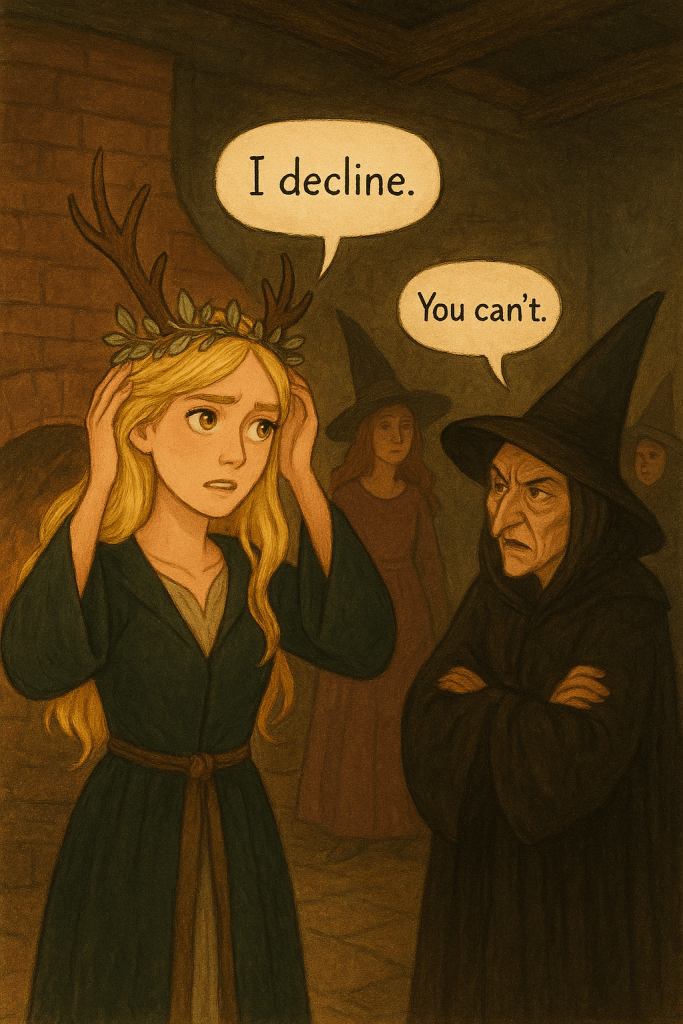
“I decline,” she said immediately. The cheering was cut short as a bottle popped somewhere. Someone cleared their throat in the silence.
“You can’t,” called Magis from the wall.The sea of witches parted for the crone as she approached Estella, Lilliana and Morrigane on her heels. Each step echoed.
“I don’t want to be in charge of a coven full of deranged pastry chefs.”
There was a unison gasp before the circle began to stretch away from Estella. They whispered to each other in disbelief.
“You won, dear.”
“I didn’t even know I was entered.”
The Grand witches all shared a look like they knew something she did not. Estella couldn’t help but think of a reason—Orlin.
“The Oven chose the one who performed best and fed it without fear,” Magis said.
“Choice is a luxury, dear. Leadership is a calling.” Lilliana added gently.
The sage crackled like a hearth, heat sinking into her scalp until it hummed in her bones. Leadership smelled of warm bread and scorched sanity. It was heavier than any spellbook.
“Well I had hardly anything to lose compared to the others.” Estella argued.
“They have spent their whole lives in these kitchens. You faced the unknown without fear.” Magis’ features were wrinkled at the edges. “Do you think the Oven is wrong?” Her eyes glinted. “Or is it that you do not take us seriously, young sorceress?”
“Apprentice.” Estella corrected carefully, trying not to offend a room of powerful witches any further. None of them moved.
She could not accept the weight of two mantles in one day. She should run, but somehow the thought of Gerald, of every dough and dream in this city, kept her feet still.
The crowd was still holding their breath as Estella surveyed them all.
Suddenly, a young witch in the front, no older than thirteen, stepped forward. She was clutching something tightly in her hands.
Estella smiled at the girl. Everyone watched as she knelt down and extended her hand. The girl floated forward. She stared into Estella’s golden eyes and opened her fist—in her palm was a small string of beads, and dangling on the end was a metal coin. The insignia of The Threefold Crust embossed on the surface.
“Will you… please teach us to bake like you?” The girl asked with her small shaking voice.
If the Oven, these witches—if Orlin—truly thought her fit, she could at least try. More children pressed forward with small offerings—how could she say no now?
“Okay.” Estella dropped the girl’s hands and bowed her head. “I can teach you what my master taught me.”
The children lit up brighter than the flames in the hearth, closing in around Estella to twirl her hair and poke her antlers. Magis and the others watched silently, spines straight with pride.
“You should ask about the benefits first.” Varric added, leaning against a larger bread golem—munching on its hand. It watched in silent shock.
Estella’s head whipped toward the arrival of his cinnamon scent. She sighed, laughed, and tore a finger off for herself.
The Threefold Crust held a celebration that night and Estella learned one last thing about the witches of Larkspur—they knew how to party.
—Archive Note: ‘Temporarily inherited the title of High Witch, which comes with a spoon scepter and a mildly cursed teapot that predicts brunch disasters. The sentient loaf known as Gerald will be fondly remembered.’
I’m going to kick off Author Spotlights with another, much more famous, New Jersey native!
Holly Black is a bestselling author of many contemporary fantasy novels. Her first book was published in 2002 (Tithe: A Modern Faerie Tale)—and, coincidentally, it was also the first book I accidentally stole from my school library in 7th grade. I still have that same well loved copy today.
My introduction to her fantastic worldbuilding blend laid the foundation for most of my preferences. The worlds shine, but it’s the depth of her characters, who face moral dilemmas with such unique personalities. Black has written everything from children’s books and graphic novels to adult fiction. She’s even a director for the film adaptation of her shared series (The Spiderwick Chronicles). Everything carries the same elegant style, but they are each distinct in their own right.
Let’s talk about why her work resonates with so many readers, including myself.
Signature Style
“If I cannot be better than them, I will become so much worse.” —The Cruel Prince
The most mundane things feel magical, and even beauty is described with danger. She writes outlandish fantasy with the nonchalance of common society and it’s brilliant. But everything is deeply rooted in history and folklore that she spent countless hours collecting—the pay off speaks for itself.
Tithe, Valiant, and Ironside are gritty, urban faerie fantasy. This was my first real experience of faeries who weren’t Tinkerbell—they were clever, cruel, and impossible to ignore. Messy humans stumbling into dangerous fae courts, bargains with consequences and lasting memories.
Co-written with award-winning artist Tony DiTerlizzi, the five-book serial has been called “Vintage Victorian Fantasy” by the New York Post and Time Magazine. More whimsical, but still with that same sharp edge—many kids grew up with Spiderwick as a gateway into fantasy.
Much like Harry Potter (another topic I covered recently) and also a NYT Best-Seller.
The Cruel Prince, The Wicked King, The Queen of Nothing. Hugely popular—this series solidified her as a household YA fantasy name. Their themes follow politics, betrayal, empowerment, morally gray characters, and the crowd favorite “enemies-to-lovers”.
Her return to Elfhame (The Folk of the Air) with a new duology shows how she continues to deepen the lore instead of recycling. It’s proof her worlds still have endless shadows and secrets to reveal—multiple series that tie a bow on well founded ethos.
Holly Black gave me my first taste of faeries, and they’ve never left. Her stories remind us that magic can be as perilous as it is enchanting—with more titles than I could list in a single post.
So if you’ve never read her work before, I encourage everyone to experience her gothic charm, and I myself look forward to the release of her newest Book of Night installment, Thief of Night, arriving September 23, 2025.
While I am preferential to all things scorching hot and summer, this season has its charms. Apple cider, pumpkin patches, hay rides, spooky vibes, oversized sweaters, and cozy romance! What’s not to love?
As the colors begin to change and the chill creeps in—families gather around fireplaces and tables full of food. We celebrate each other and the beauty of nature before it all goes to sleep. So, in honor of the falling leaves and lengthening sleeves, I’ve dusted off some of my favorite fall fiction.
P.S. I tried my best to balance the cozy/creepy vibes, almost half and half. Enjoy!
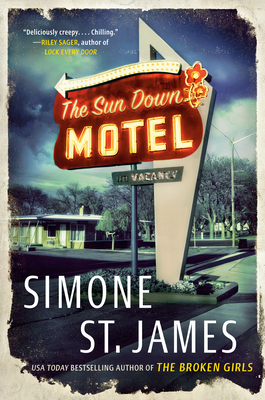
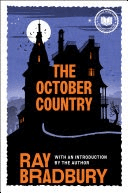
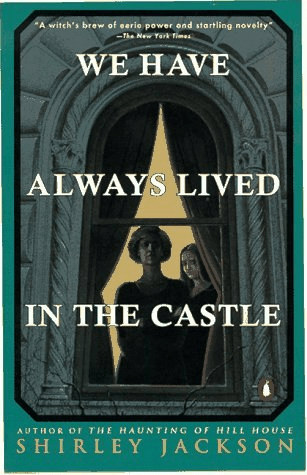
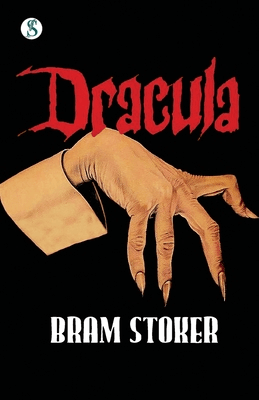
Equal parts ghost story and murder mystery, this one has that perfect spend all night turning pages by flashlight energy. A creepy motel setting in small-town New York, where the past refuses to stay buried.
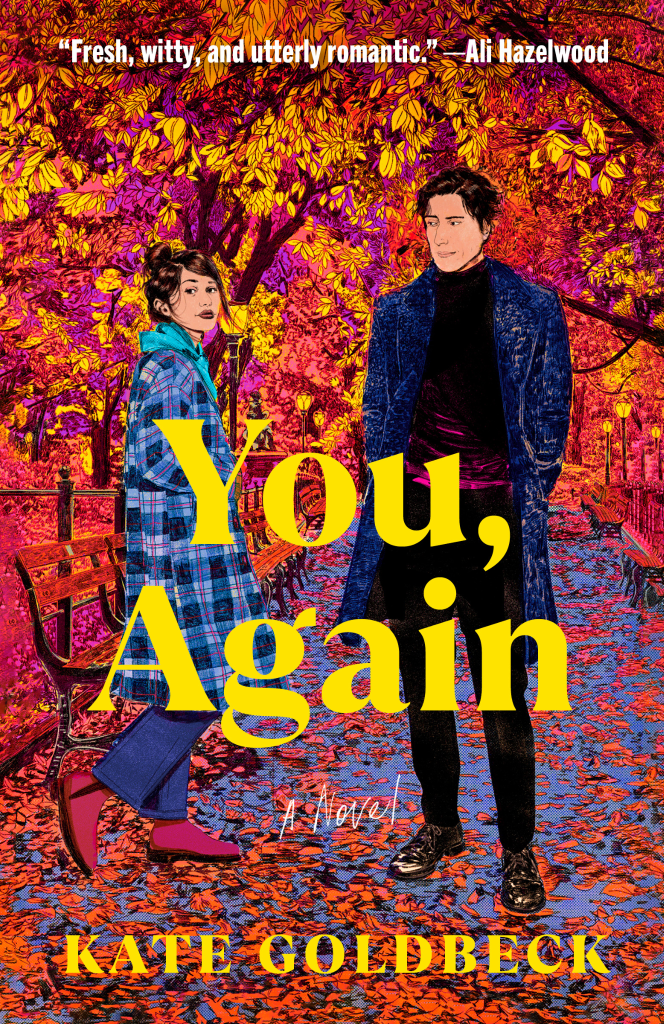
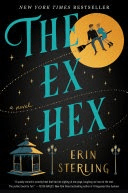
This one is a romantic comedy wrapped with autumn in the city vibes. Witty banter, complicated friendships, and just the right sprinkle of coziness for those first sweater-weather days.
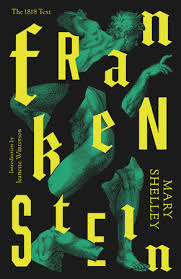
“Beware; for I am fearless, and therefore powerful.”
No fall reading list is complete without a gothic classic. Shelley’s masterpiece is chilling, tragic, and thought-provoking—especially when the nights start to feel longer.
A nostalgic, bittersweet coming-of-age story wrapped around ghost stories and urban legends. It’s more about memory and loss than true horror—like Stranger Things for wistful grown-ups.
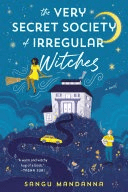
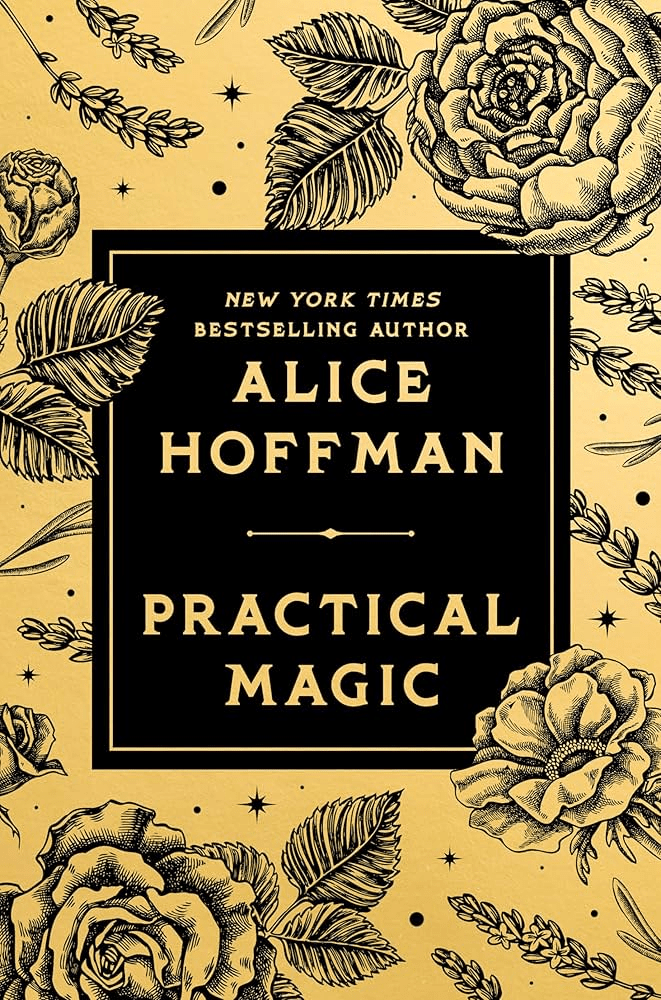
Romance, sisterhood, magic, and a sprinkle of tragedy. This is the ultimate cozy witch book—and probably the one I’ll be rereading with my latte in hand.
If you’ve already read something on the list, tell me if you agree—if you found something new here, let me know what you thought!!
By decree of the Briar Crown, I, Orlin the Wise, Sorcerer Supreme, have departed the royal court to retrieve and catalog lost Fae artifacts spanning centuries past. I leave behind my trusted colleagues to serve the throne in my absence.
As a parting gift from the Grand Witch’s Coven, I have been granted ownership of an enchanted wagon—reportedly endless in its internal structure and mildly sentient. I’m told it has a tendency to rearrange itself when displeased. We shall see.
In addition to my personal effects and research materials, I travel with two fae-touched companions whose names must be entered into official record:
Estella Wormwood, female, 18 years of age. Blessed in infancy by yours truly. Her servitude is the agreed repayment for said blessing, and she now serves as my apprentice. She displays strong affinity with her Fawn spirit—curious, agile, soft-hearted. Promising talent.
Varric Skell, male, approximately 115 years of age. Blessed by an unidentified fae during adolescence. I have granted him asylum in exchange for his service as our protector. His bond with the Coyote spirit is… unnerving. Pay close attention.
My inventory includes, but is not limited to: a complete herbarium, over four hundred tomes and arcane volumes, and a population of 327 living creatures—both magical and mundane.
The wagon is, as advertised, generous with space and unusually maternal in temperament. The children are regularly bathed and fed without my involvement. I am inclined to consider this a net positive.
As I will not return to the kingdom until either my expedition concludes or my successor is named, I submit this report to mark the beginning of our endeavor. The latter condition may come sooner than expected—my intuition, though aged, remains sharp.
Estella advances daily. She is tireless, empathetic, and gifted. Should the gods smile kindly, I believe she may one day wear the mantle of Sorceress in her own right.
Signed, Orlin the Wise Sorcerer Supreme, Fifth Crown Appointee In Service to the Archive and the Realm
ARCHIVE ENTRY #017
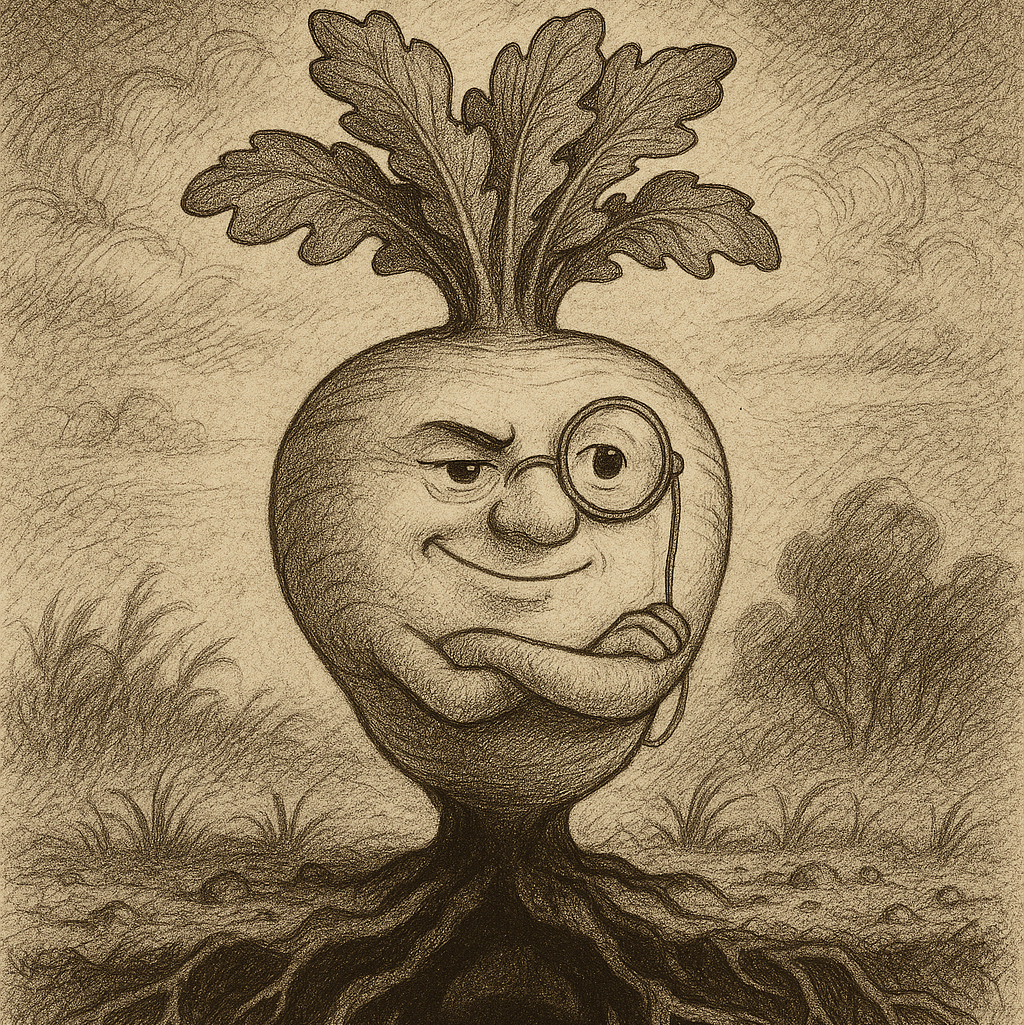
“The Turnip That Knew Too Much”
Filed by: Estella Wormwood, Apprentice of Orlin the Wise
4th Bloomtide, Year 623
Location: Turnwell Village
Security Level: Moderate
—
Sir. Rudius(Rudy) Baga
This record details the events involving a sentient root vegetable, a disgraced village, and an attempted sautéing by one Varric Skell.
Filed for posterity and the next poor apprentice visiting Turnwell.
Signed, E. Wormwood
(Note: Bestiary has added “Cognitive Vegetables” as a new subsection.)
–
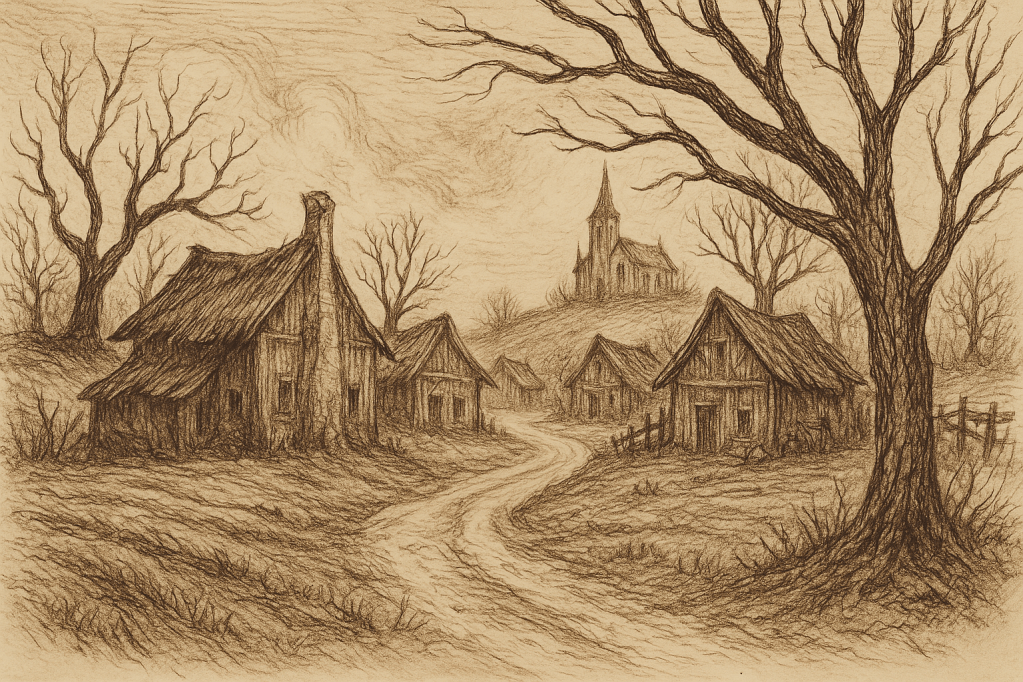
Turnwell was usually the sort of place where a wagon’s arrival brought out half the town—baskets in hand, children chasing chickens, someone always shouting about stew.
Estella was not greeted with the usual fanfare.
The cobbled streets remained empty, dust and dirt undisturbed. No boisterous children played in the clearings. Even the livestock, usually noisy and nosy, stood oddly still in their pens, blinking like they’d forgotten how to chew.
She turned back to the wagon. “Are you sure this is the place? Seems like no one’s home.”
The wagon groaned and snapped its curtains shut in offense. Estella raised her hands in surrender. A lock clicked behind her. The lantern hanging from the canopy flickered, then went out.
“Fine. Message received.”
Estella sighed and adjusted the satchel on her shoulder. “Right. Exploring the haunted farm village it is.”
Turnwell’s silence wasn’t just unsettling—it was suspicious. It had the feel of a place that knew it was hiding something. She walked on, the soles of her boots the only sound echoing off the shuttered windows.
It took half an hour and two false turns before she found someone—a wiry man perched on the edge of a crumbling fence, straw hat pulled low, pipe unlit.
“Afternoon,” Estella said, friendly as she could manage.
The man blinked slowly, like he hadn’t spoken to another soul in weeks.
“You with that… thing?” He gestured vaguely in the direction of the wagon, as if afraid it might hear.
“That thing has a name,” Estella said. “But yes.”
He grunted.
“I’m Estella. Apprentice to Orlin the Wise. I was hoping to offer some assistance. Maybe trade. I hear your fields have gone barren.”
The man tensed. “No one said that.”
“You haven’t harvested in two seasons.”
His jaw clenched.
Estella smiled, gentle but persistent, pulling some parchment from her satchel. “I’d be happy to take a look. We’ve got supplies. Potions, enchanted compost, sunstone mulch—”
“No need.” He stood abruptly. “Land just turned on us. Happens. You can’t fix dead earth.”
“You’d be surprised,” she said, tone still light. “Magic’s full of rude awakenings.”
He narrowed his eyes, finally noting the antlers poking out from her head. “Don’t go nosing around. The land’s cursed is what it is. Nothing natural grows there anymore. You’ll get yourself turned inside out if you meddle.”
“Noted. Just offering to help.”
He spat into the dust. “You want to trade, trade. Otherwise keep to the road.”
Estella bowed her head just slightly, writing “Curse” under Suspicious Deflection, and turned to leave.
—
The village was a few paces behind her when she caught the scent—fresh soil, blooming mint, something vaguely nutty and… buttery?
Estella paused.
To the east, just beyond a thicket of dry hedgerow and a bank of turned soil, the village’s supposed “cursed land” spread out like a forgotten dream. Fields—lush, thriving, unreasonably green—sprawled across the low valley. Cornstalks taller than men bowed in the breeze. Vines thick with blossoms choked old stone walls. Something glowed faintly in the furrows.
“Right. Very cursed,” she muttered, ducking through the hedge.
She didn’t get far before her boot nudged something unusually firm in the soil.
It yelped.
“Good heavens, watch the leaves!”
Estella stumbled back.
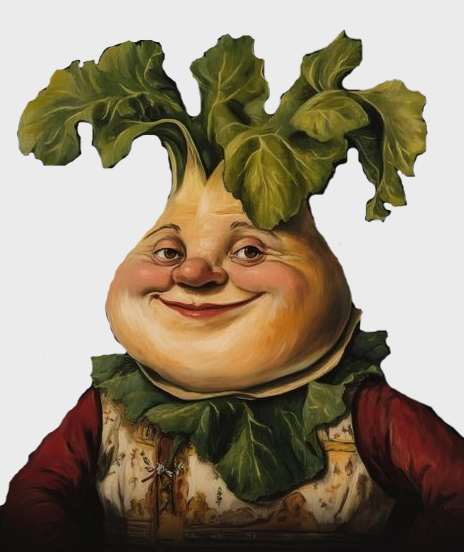
There, halfway unearthed in the garden bed, was the face of a turnip. A very annoyed, very expressive turnip, with delicately furrowed brows and a ridiculous monocle jammed over one golden eye.
“I say, finally someone with manners,” it huffed. “Do you have any idea how long I’ve been stranded among these buffoons? If I have to hear one more cabbage scream about root rot, I swear I shall compost myself out of sheer boredom.”
Estella crouched slowly. “…Are you enchanted?”
“Enchanted?” The turnip sniffed. “No, madam, I am ennobled. I am Sir Rudius Baga, heir to the Verdant Vale, fifth son of Duchess Marrow of Carrotria. And you—” He paused, squinting at her golden eyes. “Oh! You’re fae-touched. Delightful. That explains the cheekbones.”
“I have so many questions.”
“And I shall answer all of them, in excruciating detail—over tea. Chamomile, preferably. Loose leaf. With honey. I’ve been eating nothing but soil and gossip for three weeks.”
“You eat gossip?”
“Figuratively, dear girl. Though I did nibble on a radish who claimed to be a reincarnated queen. Terribly spicy.”
—
Estella soon found herself sipping lukewarm tea, seated at a table outside the wagon, asking questions to a turnip…wearing a monocle. Rudy insisted on real porcelain, which he claimed “heightens the bouquet,” though he had no nose and couldn’t drink.
“I must say,” Rudy drawled, “I do appreciate the civility. Most peasants I’ve spoken to simply scream. Of course, the villagers here were so grateful for my blessings. I advised them on crop rotation, pest management, a few simple rituals—just the basics!”
Estella stirred her tea. “Has anyone tried to cook you?”
“Oh, please. I am quite charming company.”
From the wagon steps, Varric snorted. “Charming doesn’t sound like moldy cheese with a superiority complex.”
Rudy gasped, his leaves wilting in offense. “You again! You unwashed slab of fur and bad decisions! Of course you’ve found a new hand for your leash”
“Still want to roast you.”
“You tried to pair me with rosemary, you barbarian!”
“I was hungry. You were annoying.”
Estella nodded to herself, agreeing with her own assessment. It’s not shocking to hear of their history given his former employment to another sorcerer. And if it were anyone, it would certainly be a young Varric.
“Touch me and I’ll tell everyone about the time you cried during that symphony.”
“It was a good song,” Varric growled.
Estella pinched the bridge of her nose. “Enough. Rudy, you said they used to bring you tributes?”
“Gifts,” Rudy corrected. “They brought me gifts. You must understand, I was their spiritual advisor. They came to me for agricultural counsel, relationship woes, the occasional weather dispute… Naturally, gratitude flowed.”
“They buried things at the edge of the field?” Estella asked.
“Oh yes, quite the odd habit,” Rudy said breezily. “Maybe it was ancestral reverence. Or perhaps they thought I was lonely.
Estella stared at him. “You’re telling me you didn’t ask for sacrifices?”
“I never said ‘sacrifice.’ That’s such an ugly word. But one day, the mayor brought me a chicken. Honestly, I said nothing! I assumed it was a cultural thing.”
Estella scribbled furiously in her journal. Rudy was humming what sounded suspiciously like a baroque waltz from his spot in a tea tin.
That night, the Bestiary refused to house him. The Kitchen tried to slice and serve him. The Archive had let him alphabetize himself under “N” for “Nobility.”
She was going to need to file several new categories after this.
Archive Note: Sir Rudius Baga is not a vegetable, he insists. “I am an entity,” he said, “of considerable depth and social importance.” Proceed with caution. And perhaps silverware.
—
The next day, Estella found the farmer where she’d left him: hunched on that same splintered fence, pipe still unlit, watching the empty road like it might bite him.
He didn’t turn when she approached.
“You again,” he muttered. “Didn’t take the hint yesterday?”
“I’m persistent,” Estella said, folding her hands behind her back. “And curious. The field to the east—lush, green, glowing in a vaguely suspicious manner—you say it’s cursed. But you also say nothing grows.”
He didn’t answer.
“So.” She paced slowly in front of him. “Help me out. Is the land dead, or unnaturally thriving?”
The man spat into the dirt again. “It’s both.”
Estella tilted her head. “That’s not how dirt works.”
“That’s how he works.”
A pause.
“…You mean Rudy.”
He flinched at the name.
“I knew it,” she said quietly. “What is he?”
The farmer’s eyes, bleary and bloodshot, finally met her golden gaze. “He’s hunger. Wrapped up in charm and leaves and lies. We brought him here with a bargain we didn’t understand. Should’ve known better than to make deals with the Fae.”
Estella’s heart sank a little. “What kind of bargain?”
He hesitated. Then stood, motioning with two fingers. “Come on. You want answers, you’ll get ‘em. Just don’t touch anything.”
—
They walked in silence through the old orchard, past a moss-covered well and a rusted plow swallowed by roots. At the edge of the lush field stood a half-collapsed tool shed.
Inside, behind moldy sacks of seed and a shelf of bone-dry potions, the farmer lifted a false wall to reveal a shallow pit—lined with old stones and offerings long abandoned. Half-buried in the center was a pile of yellowed bones, crusted with dried mint and something darker.
Estella crouched beside it.
“This was… the mayor?” she asked softly.
The farmer nodded. “Got it in his head, Rudy was divine. Said the turnip whispered in his dreams, told him how to fix the crops, save the village. Said we owed him.”
“And you believed that?”
“We were starving,” he said. “For a year, not a drop of rain. Half the livestock died. Folks were digging up bark and chewing moss. When the fields came back… we didn’t question it. Not ‘til we realized the cost.”
Estella touched the blunt head of a femur, feeling a faint thrum of residual magic—old, tangled, wrong.
“No one’s fed him since,” the farmer said. “No one dares. But we couldn’t pull him up, neither. He was rooted deep.”
She stood. “What do you feed him?”
The farmer didn’t answer. Outside, the corn rustled ominously, though there was no wind.
—
Back at the wagon, farmer in tow, Rudy was humming a lullaby and organizing sugar cubes by pyramid height.
“Oh, there you are,” he chirped. “I’ve been thinking of new ways to aid the harvest. Have you considered the possibility of a spring festival? I could draft invitations.”
Estella set down her satchel, in no mood for his courtly machinations, “You were brought here by a Fae bargain.”
“I was invited,” Rudy said with a sniff. “Summoned, technically. Which is rather impolite if you ask me.”
“You eat life force!”
“Eat is such a vulgar word,” Rudy said. “I… incorporate it. Redistribute it. Very economical.”
“You’re the reason this place is dying.”
“I’m the reason this place lived,” Rudy snapped, his leaves twitching. “I merely… suggested methods. Efficient ones! What’s a little blood for a banquet of golden grain?”
Estella exhaled slowly. “You convinced these people to murder their own.”
“I never asked them to,” Rudy said, looking offended. “They offered. I’m not ungrateful.”
“Rudy,” Estella said, voice low, “they gave up their lives. Their families. Their souls. That’s not a thank-you gift.”
He went quiet. In the shadow of the tea tin, his monocle gleamed faintly. Estella stood for a long moment basking in the flame of her temper, watching the tiny glint of metal and pretense.
“Varric,” she said at last.
He didn’t look up from where he was sharpening a butter knife. “Hmm?”
“Get the tongs.”
The turnip flinched.
—
The farmer didn’t argue this time. He just led her from the wagon, down a side path behind the grain store, past a tree with rope marks too old to be recent and too deliberate to be innocent.
“Tell me the whole deal,” Estella said. “No riddles. No metaphors. I’m fresh out of patience and I’m halfway to conjuring a root rot plague on your entire pantry.”
He didn’t smile. Just exhaled like the words had been stuck in his lungs for years.
“It wasn’t supposed to last. The mayor called him up after the drought—said the earth needed a steward, a caretaker with… deeper roots.” The man winced at his own phrasing. “We thought we were getting a spirit. Got a politician with delusions of grandeur.”
“And the bargain?”
“Life for life. One to start the cycle. One each season to keep it spinning. Blood soaks deeper than water.”
“Nice motto. You wanna put that on the town banner?”
He didn’t answer.
Estella looked back toward the wagon. “Alright then.”
She rolled up her sleeves.
“Let’s remove a parasite.”
—
It took salt, iron filings, a bottle of Varric’s ‘special blend’ whiskey, and the mayor’s old pocket watch—still ticking, disturbingly slow—to set the ritual circle. Rudy sat in the center, placed rather firmly in a soup bowl.
“I feel this is all deeply unfair,” he muttered. “You’re treating me like some common curse. I’m an institution.”
“You’re a moldy root with an ego problem,” Varric said, tossing dried mint into the fire. “And I’m hungry.”
“Touch me and I swear I’ll haunt your seasoning rack.”
Estella didn’t look up from the chalk runes. “Do turnips have souls?”
“Mine is magnificent.”
“I’ll take that as a no.”
The fire flared. The runes burned green, then gold, then a slick, unpleasant color not found in the rainbow. Rudy stiffened.
“No,” he said. “No, no, no. You don’t understand—I improved things. I brought prosperity. You were all so grateful—”
“You ate people, Rudy.”
“I didn’t chew! I’m refined!”
The wind shifted. The cornfield groaned. From deep underground, something growled—a sound like rotting roots and regret.
Estella pressed her palm to the final glyph.
“You’ll regret this, you know,” he croons, voice thick with static and soil. “Your fields will wither. Your stew will be bland. And no one, no one, will ever compliment your compost again—”
“Shut up, Rudy,” Varric mutters. “You’re going in the pot.”
“I revoke the invitation. By sun and soil, by debt repaid and names remembered—I cast you out.”
The soup bowl cracked.
Rudy screamed.
It was not, as one might expect, a high-pitched squeal, but a surprisingly musical baritone—like a disgraced opera singer tripping down a flight of stairs made entirely of accordions.
The earth shuddered. Vines shriveled. The air tasted briefly of overripe nectarines and unresolved tension.
Then, the field returned to silence. Real silence this time. The kind that didn’t hum with suppressed guilt or supernatural gardening tips.
Estella slumped against a barrel.
“Well, that was… unsettling,” She said, rubbing her temples as if to scrub away the echoes of the ritual. “I can’t say I’ll miss the turnip, but I think I might need a drink after that.”
Varric held up a slightly charred turnip. “Still edible.”
“I’m not eating sentient produce.”
“He insulted my stew. That’s personal.”
Now, for the first time since their arrival, she laughed in earnest.
—
The villagers emerged, tentative and sun-starved, blinking at the sky like they weren’t sure it would still be there. Turnwell may not be saved, but it has a future now. The soil is quiet. The kitchen is full. The curse is broken.
A modest celebration unfolded—modest in scale, less so in culinary creativity. The stew was excellent. Rudy, for the record, was seasoned with rosemary.
Estella filed her final note in the Archive entry two days later,
“False Idols and Fae Influence – Subcategory: Root-Based”
“Turnwell will recover. The land’s still shy, but willing. The villagers are planting again—real crops this time. No blood. Just honest work.
As for Sir Rudius Baga: he will not be missed.
Though he was, in fairness, absolutely delicious.”
Whenever one writer meets another in the wild, the age old question is sure to come up.
‘How do you get over your writer’s block?’ ‘How can you write so much? So fast?’
I’ve asked enough people to—well—compile a blog post it seems.
The biggest thing about writer’s block is that it’s theoretical. There is no definite right or wrong answer to the question. It’s almost a matter of opinion. Sometimes there’s a small habitual switch, or sometimes you’ve completely rearranged your routine. The human mind works in mysterious ways—and with over 8 billion minds on this Earth, there’s bound to be a lot of differences.
Not to mention other responsibilities in life. Maybe you started a new job or that final is due next week. Maybe you have kids or you’re finally taking that trip you’ve been saving for since college. Finding time in a sea of commitments can feel impossible.
Here are 5 things I think about whenever the white space is taunting me.
1 – Try a Change of Scenery
If you’re feeling adventurous there are plenty of options. Your local bookstore, a quiet coffee shop, the public library, a nice park (best for our pen and paper lovers). Going somewhere new and experiencing fresh sights/sounds/smells can help pull your brain out of that repetitive cycle—which is one of the hardest obstacles we face.
Other times we want to stay inside, and that’s okay too. Sometimes I’ll go sit at the kitchen table or just curl up on the couch. Even changing things around on my desk can be enough. Anything new or fresh to look at might open a new door of inspiration.
That cat poster hanging on the wall? Now it’s a sunset—suddenly I feel ready to write the next international bestseller. One time I looked over at my lampshade with these little dangling jewels and it reminded me of a fortune teller. Which turned into a wandering performer who wore an oversized cartwheel hat with the same hanging jewels.
Even a seemingly insignificant item or switch can turn into something if you let it.
2 – Find Another Creative Outlet
Creation is meant to bring joy. Do anything that makes you happy—soon you’ll remember that same joy you feel for writing, and your arsenal of artistry will only grow.
Whenever the words come to a halt—I take some time to reacquaint myself with my characters. I love to draw almost as much as I love to write. So naturally I have entire sketch books dedicated to book covers and character designs. If I’m feeling extra lazy, I’ll browse pose references on Pinterest and draw on my iPad.
Painting, Knitting, Pottery, Woodcarving, Baking, Music. (I could go on forever)
Imagine art as an old tree. One branch turns to five, turns to ten, turns to fifty. If a single leaf dies—you still have a whole tree.
3 – Explore Short Story Prompts
Sometimes you are in the mood to write but the movie won’t play in your head. The world you’re building is expanding too fast to keep up with or the ideas start tangling together. Or maybe you just need a little warm up to get the gears turning.
If my fingers stop moving and I start rereading the same line over and over—I simply close the document. After getting past the frustration I decide if I’m just at a loss in this story or if I’m truly done writing for the day. Most times it’s the former. So I asked myself a relatively simple question—what’s your favorite thing to write about?
For me it’s anything silly and magical. I took that answer and started thinking of cozy little one offs. Now, whenever I feel myself drifting, I pull from my list and write something small. (600-1000 words)
Who knows—maybe one day Estella and her magical adventures will make it to the spotlight.
If you’re struggling to find your own answer, try starting with warmups from here:
I took part in Reedsy’s Novel 101 course at the beginning of this year. They offer amazing resources and insightful lessons—I will praise them until my dying breath.
4 – Write in a Different Perspective
This one’s a classic. It’s the kind of advice you’ll hear from a writing coach, an editor, or literally any YouTube video on writing tips—and that’s only because it works.
If a scene doesn’t feel quite right—especially if it’s an important moment—it can be discouraging. Instead of pushing through with low morale, try shifting the lens. Write the same scene from another character’s perspective. Their thoughts, priorities, or emotional reactions might surprise you, and suddenly the scene has new depth.
And it doesn’t always have to be the same scene. Sometimes we worry about readers feeling trapped in one point of view, but we forget that we can feel trapped too. You spend far more time with your protagonist than your readers ever will—so give yourself a break.
Try writing a chapter, or even just a paragraph, from someone else’s eyes. You might never use it, but you’ll know your characters better for it.
Like they say, walk a mile in someone else’s shoes—you can learn a lot.
5 – Just. Take. A. Break.
You may be thinking—How could I suggest such a thing in a post about not abandoning the craft? Because whether we like it or not, we’re all human.
There is always something going on in life. It is physically impossible to do everything at once, believe me, I’ve tried too many times (and despite my preaching…never learn the lesson). You should never feel bad about giving yourself some grace.
Maybe you didn’t write three chapters this week, but you did fold all the laundry and tried a new chicken noodle soup recipe—and that’s great too! Remember that you are your tool. You can’t do a proper job without well maintained tools.
For example I attended multiple parties for Labor day this past weekend. It was nice to spend time with friends and family. They asked me all kinds of questions and are, honestly, responsible for this entire post.
Sometimes the opportunity to share with others can offer clarity for us as well.
At the end of the day, writer’s block is part of the process—it doesn’t mean you’re not a writer. Experiment, be patient with yourself, and trust that the words will return.
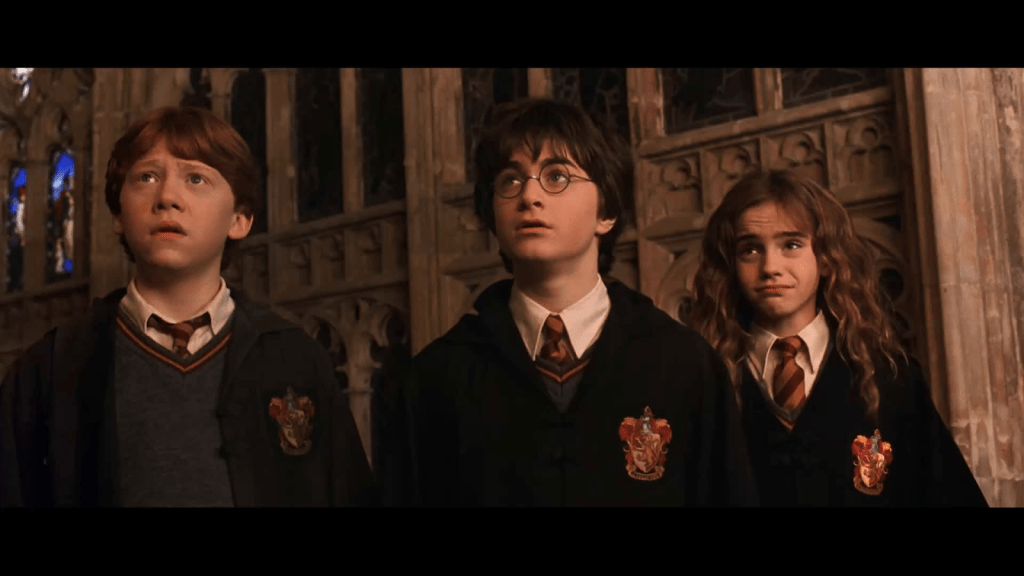
“Devil’s Snare, Devil’s Snare . . . what did Professor Sprout say? — it likes the dark and the damp —”
“So light a fire!” Harry choked.
“Yes—of course—but there’s no wood!” Hermoine cried, wringing her hands.
“HAVE YOU GONE MAD?” Ron bellowed. “ARE YOU A WITCH OR NOT?”
–
“Lucky you pay attention in Herbology, Hermione,” said Harry as he joined her on the wall, wiping sweat off his face.
“Yeah,” Ron said, “and lucky Harry doesn’t lose his head in a crisis—‘there’ s no wood’ honestly”
___
While it’s not technically a classic, this book—and really, the series as a whole—is well known. Gorgeously imagined, quick-paced, and full of surprisingly amusing eleven-year-old banter.
Reading it for the first time in my mid-twenties was certainly an experience. I actually beat the Hogwarts Legacy video game before ever picking up this book. I’ve also seen the Fantastic Beasts movies, but none of the Harry Potter movies. Those puzzling feats in mind, the world was already built in my head before the journey began—which is our first point.
Setting
Everything in the beginning is described as ordinary and mundane. It paints a clear (and very dreary) picture of poor Harry’s life with the Dursleys. The moment Harry is whisked away into the wizarding world, everything takes on new color.
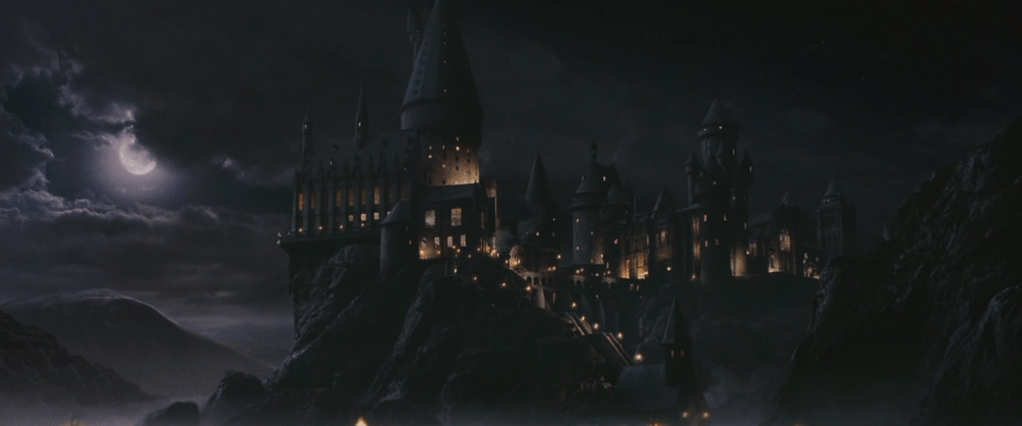
That major contrast immediately sets the tone for the rest of the book. This world is massive, colorful, and—despite the presence of darkness—joyful and freeing. Hogwarts itself is full of oddities and strange happenings. It strikes a great balance between inviting and haunted. Having already explored the castle in Hogwarts Legacy, it was fascinating to see how Rowling’s descriptions matched (and sometimes surpassed) what I had imagined from the game.
Every description feels carefully placed with purpose. Rowling leaves very little room for nonsense without meaning (haha). And as the story moves through the year, the changes in season are vivid, giving the reader the sense of passing time while still keeping up the fast-paced momentum.
Characters
Harry makes for a very memorable main character. He spends much of the book observing, but don’t be fooled—he’s headstrong and afraid of far less than any eleven-year-old I’ve ever met. It’s clear he understands much of what’s happening to him, even when adults underestimate him.
Dumbledore knows even more—though he never overshares. Moments between him and McGonagall drop hints, but his reputation is so high that no one dares to question him… perhaps they should. Still, his faith in his students as their headmaster shines through.
Ron: Far more outspoken than Harry, and sometimes more reckless. Hermione: Brilliant, disciplined, and quietly a grounding force of the group.
Neville…awkward but charming. And Draco—a spoiled child if I’ve ever seen one, but he is a convincing obstacle on the emotional front.
Plot
Now that I’ve told you about the book—let’s talk about the story.
(In case there’s anyone else out there who hasn’t read it yet I will avoid spoilers)
The book begins with some exposition that foreshadows the greater arc as well as establishing Harry’s life in the Muggle world.
A life that was not at all what it was supposed to be—until a very large, very hairy man chases them to the literal ends of the earth. Suddenly Harry is a wizard (haha again) and what most would see as a complete upending, to him was the answer that finally made everything make sense. He was not wrong or devilish, and he was ready to take the leap.
When everyone makes it to Hogwarts, classes proceed and the year passes by. They learn everything from flying a broom to setting someone’s pants on fire. Every lesson and interaction builds subtly towards the climax. Each small detail and fact aid Harry on his journey of discovery and friendship.
Our trio often find themselves stumbling into questionable situations—sometimes by their own doing, sometimes by fate of—’The Boy Who Lived’ and ‘He Who Shall Not Be Named’. Until everything they think they know is turned inside out. Now they must use what they’ve learned to save the day.
This is where the storytelling shines. These are young children facing forces greater than themselves—instead of an overwhelming victory, we see them using their personal strengths in…unique ways.
You spend the whole book reading bright flashing signs that point to the villain, but when the time comes—you remember that your narrator is eleven and unreliable.
The subtle resolution sets the foundation of the series. A whole year encapsulated in one book, with developing young minds, emotional stakes, and the fate of magic hanging in the air. A brilliant device for story progression—I can’t wait to see what changes as the years go by and they become more seasoned witches and wizards.
Final Thoughts
This story is ripe with imagination, there’s something new and wondrous on every page.
There are times the writing feels overly simplified, perhaps that’s because it’s middle grade, but I would take a point off for the moments I had to force myself forward. The other point was removed for certain descriptor choices when talking about people—theres a fine line between clever and crude.
In general I think this book has such a beautiful platform to build upon, the kind of world that you could create a hundred different stories in. At its core, it isn’t just about magic—it’s about friendship, courage, and the freedom of choosing your own family. Those themes are timeless, which is why the story resonates even outside its intended audience.
Harry Potter is indeed worth all the hype and I would recommend reading it regardless of age or unfortunate discourse surrounding Rowling.







 Alyssa B.Newbon
Can’t wait! Super excited!